Yesterday we visited Conimbriga, the Roman Ruins. I wanted to dedicate some time to this place as it is something worthwhile to share.
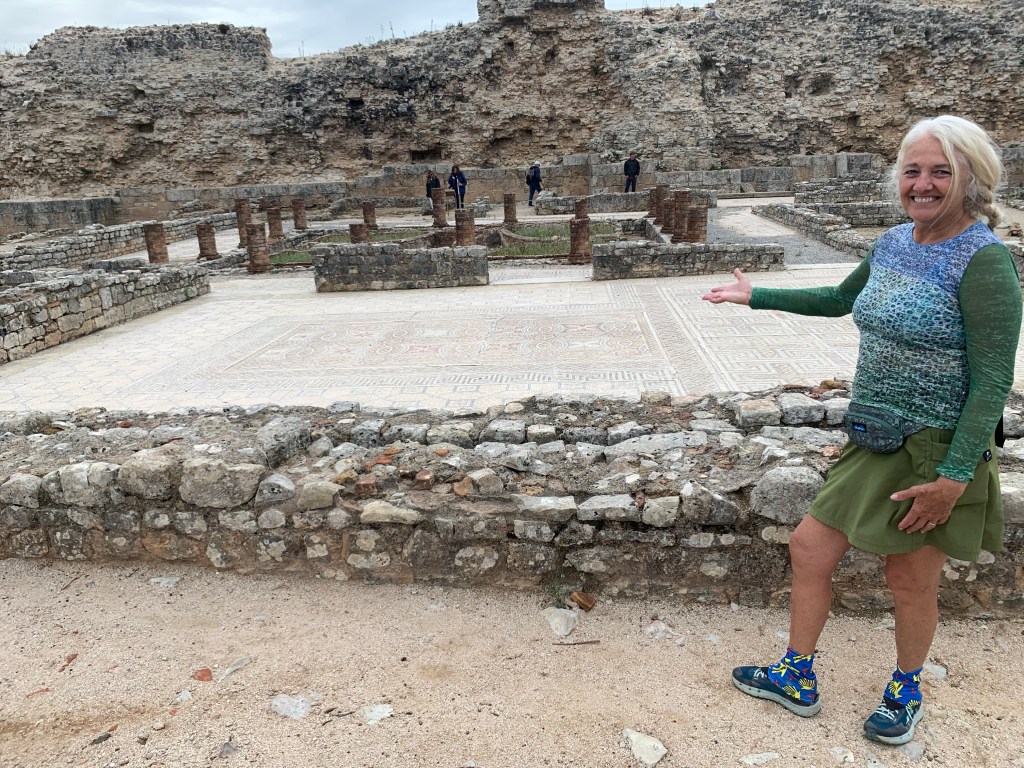
When George and I embarked on this journey, we surely had no idea all the side trips that we would take. Lucky for us, we are retired and hence have time to explore. As we approached this fence, now we now it as a Roman City. We had no expectations as to how much time we would spend here. Just as the city planners had no idea when they decided to build a road, that they would unearth an entire city that dates back to the 1st Century. Could you imagine?

Conímbriga is one of the largest Roman settlements excavated in Portugal, and was classified as a National Monument in 1910.
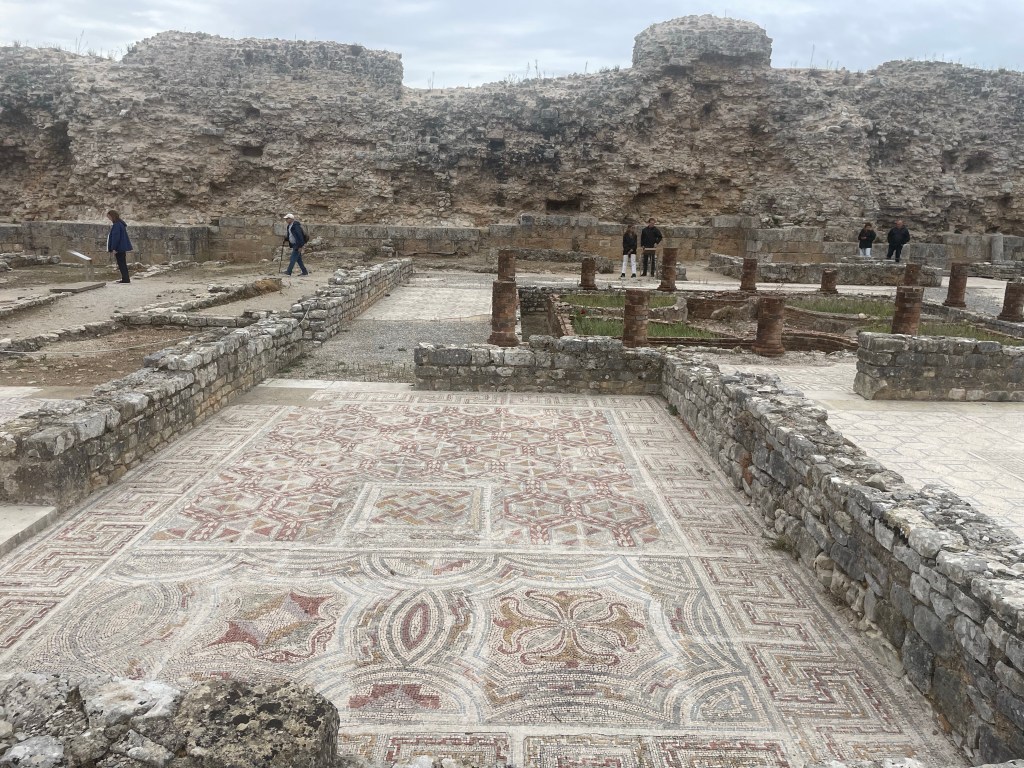
Conímbriga’s origins date to Celtic times (briga is a Celtic term for a defended area). But it was under the Romans, who arrived in the 2nd century BC, that it blossomed, thanks, in part, to its strategic position on the main route between Lisbon (Olisipo) and Braga (Bracara Augusta). This is why many Portuguese believe that we are from Portugal. George’s name is very similar to their City of Braga.

After the golden age in the 1st and 2nd centuries, it eventually fell prey to barbarian attacks and, in 468 AD, it was captured by Germanic Suebi forces. Many citizens fled to nearby Aeminius (Coimbra) – thereby saving the city from certain destruction.

As we entered the ruins, there is a massive wall rising in front. Dating to the 3rd century, this was built to keep out the by-now threatening barbarians and originally ran right through the city centre – but much of the city’s residential area was simply abandoned.
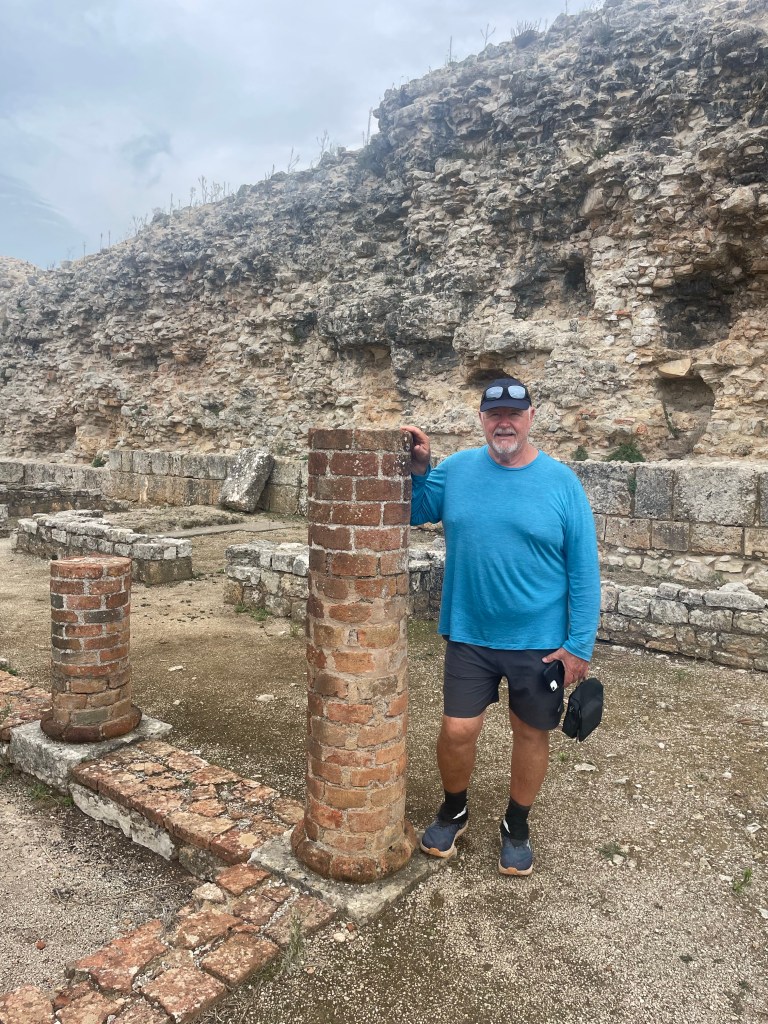
Under the walls are a series of mosaic-floored villas, including the House of Skeletons and the House of the Swastika – to the Romans the swastika was a symbol of good luck. Over the wall, was the city’s largest private villa.

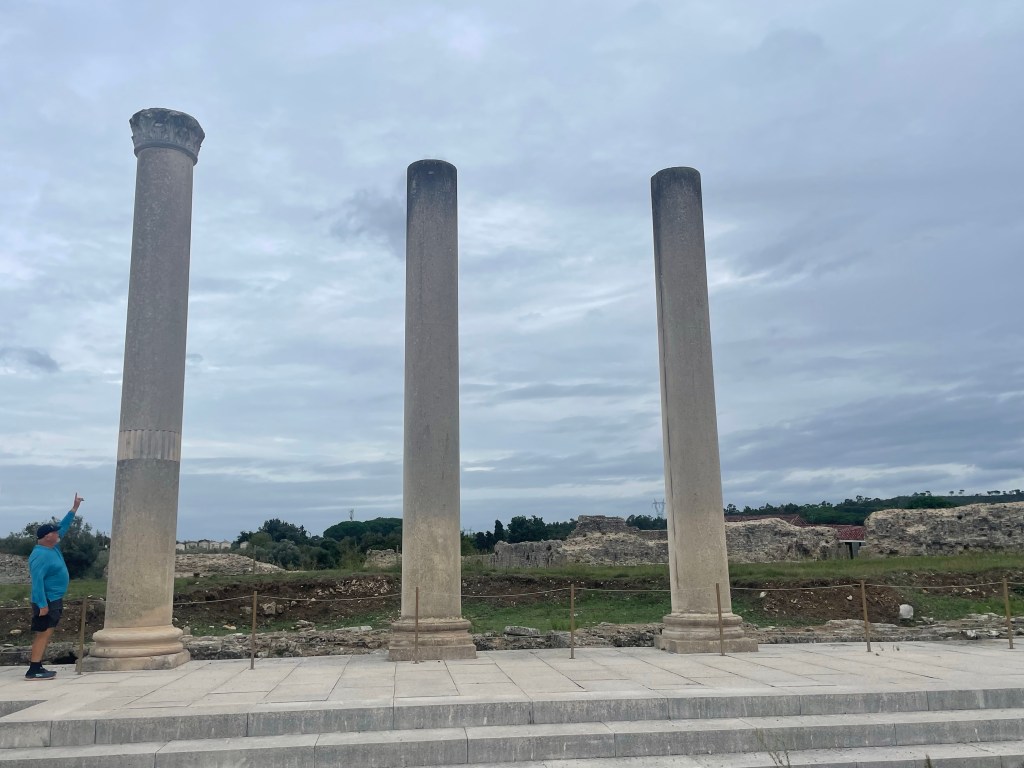
The most intriguing part of these ruins is the fact that we were able to walk through them like we owned the place. There are a few areas that are roped off, but for the most part, you can enjoy this piece of history up close and personal. They said that close to 10,000 people lived here during its existence. With commerce and the location, halfway between Lisbon and Braga, it served as a huge trade route for Romans. This city catered to many cultures for hundreds of years. It truly was a fascinating place to visit.
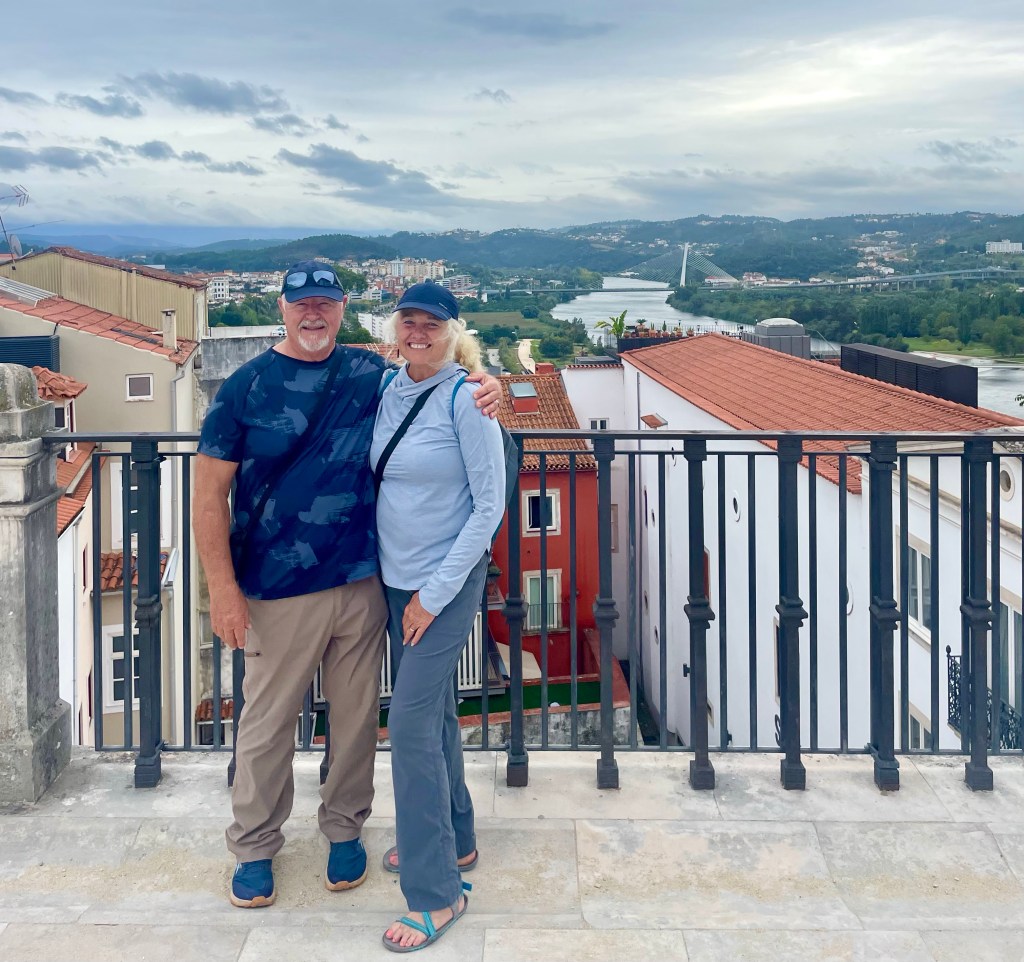
Today, we took a guided tour of Coimbra, which is home of the prestigious Coimbra University. Being here in October has its perks as we saw the 25,000 students that attend this campus. The studies include Law, Medicine, Science, Languages and Mathematics. It is considered the Oxford of Universities here in Europe. The price to attend is $1000 per year for Portuguese, and students who come from abroad pay a whopping $7000 Euros per year. Yes, that’s what I wrote per year! Their Dorms are $150 Euros per month which includes room, board and all the food a starving student can eat. Education is quite affordable and it appears that everyone attends. The end of the story is it’s nearly impossible to find a career here in Coimbra so most of the students move back home or other countries.
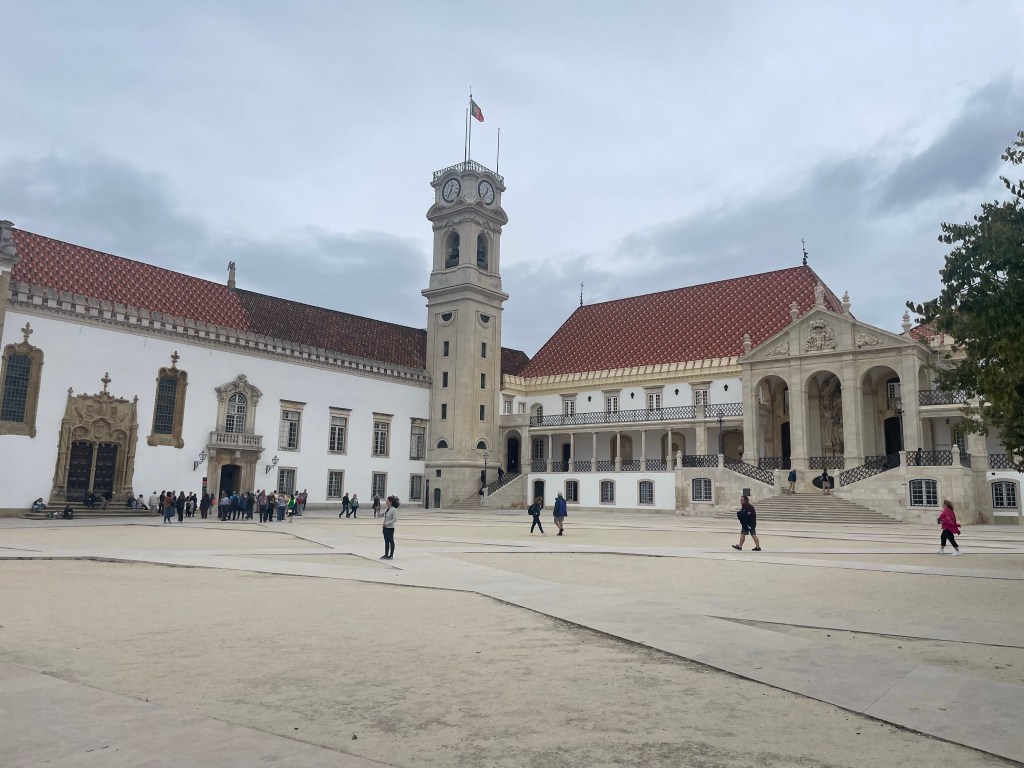
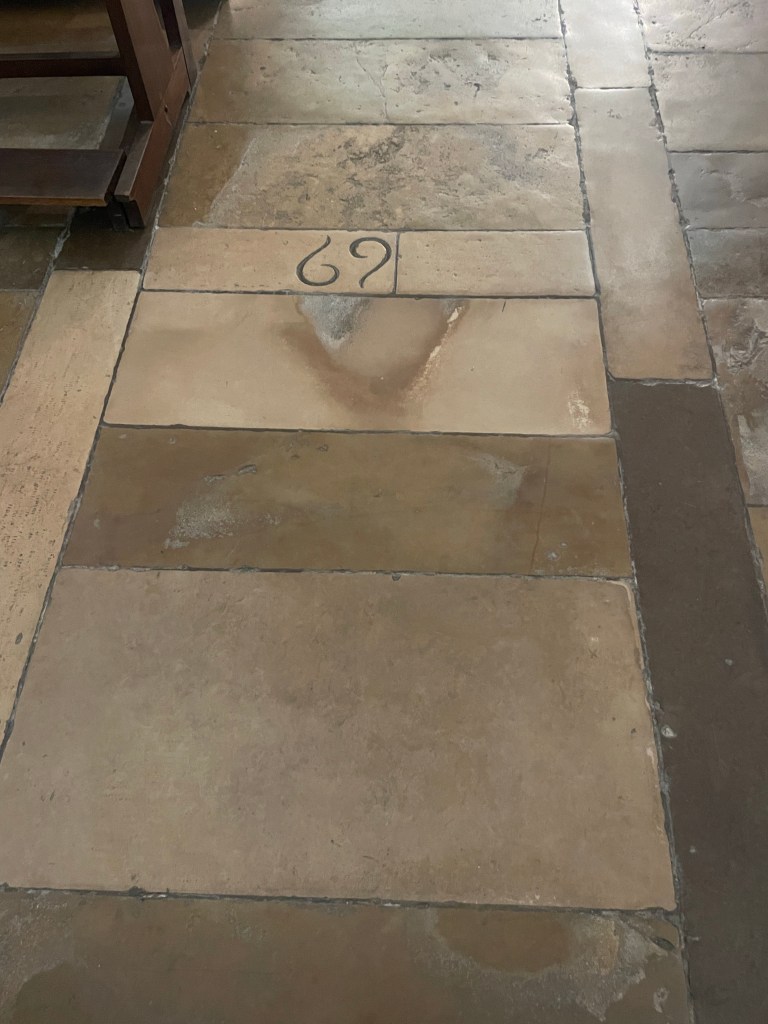
Coimbra is rich in tradition and has one of the largest churches in all of Portugal. In the 14th Century, close to 500 Monks lived in the Monastery. When the Monks passed, they were buried inside the church. There are 71 tombs that were marked simply with a number. This way all Monks are equal status. One of the many reasons why they burn incense in the churches is to cover the smell from the burial grounds. Who would’ve thought?
A couple of facts that were helpful to understand. Fly Season is in full swing. September-October is Harvest Time, hence brings flys to the region.
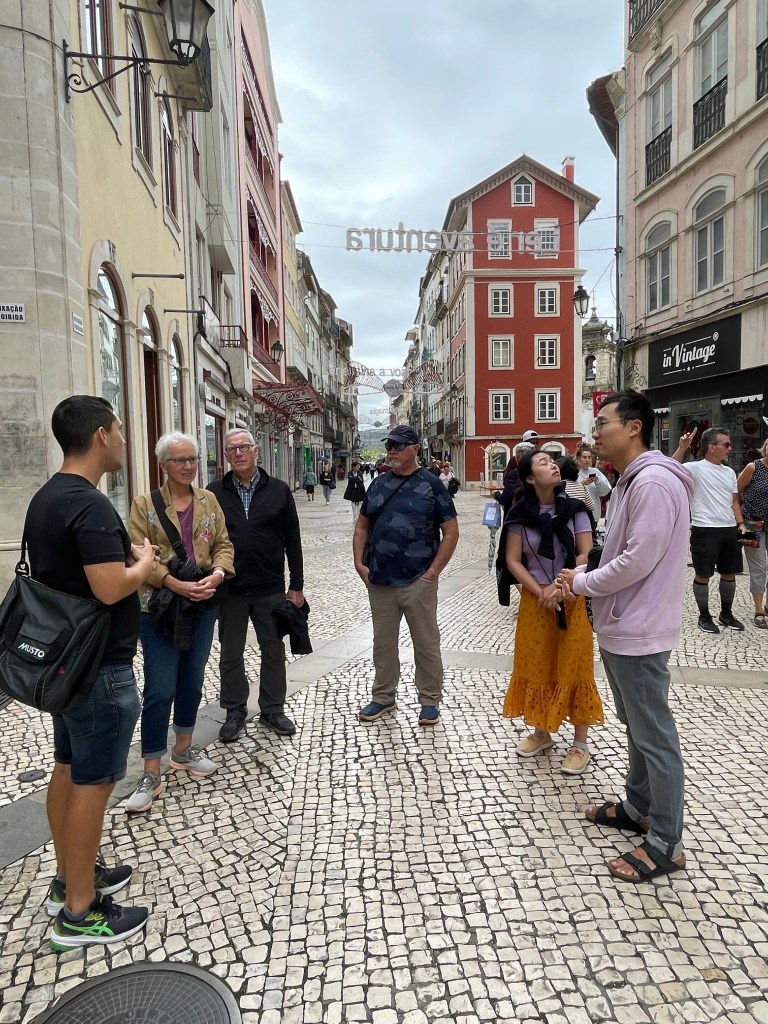
George asked about all the white blocks and squares that we see on the city streets and rural roadways. Our guide explained that during the Lisbon earthquake in 1755, that many of the buildings were left in ruins. Rather than disposing of the crumbled buildings and statues, they repurposed them by constructing walkways and roadways from the remains. Absolutely brilliant!
The Library at Coimbra University is one of the Tenth largest Libraries in the world. Right here in Portugal. If you Google The Beauty and the Beast, there is a portion filmed in the Coimbra Library. They have bats that reside in the library and rather than exterminating them, they decided to keep them as they eat the small bugs that may harvest eggs and larvae on the hundreds of thousands of books. Little unknown factoids that now you are privy to!

We had such an interesting stay in Coimbra. But now we are off to our next destination, Porto. George and I will board a train and head 100 miles north. This will be our last opportunity to take alternative transportation outside of our most worthy feet. The plan is to spend a couple of days in Porto, then leave by foot to finish our Camino. For now, we will continue to eat, drink and submerge ourselves in the culture of this incredible country.
 kellyhikes4god
Love the detail in your blogs. Where do you get your info on each of the places?
Great pic of you and George!! That’s a keeper for sure
LikeLiked by 1 person
I get info from many ways. Plaques along the way, talking to the locals, my WisePilgrim app and sometimes I even use the internet 🙉 But most of my facts I find along the way. Glad you enjoy it. I spend a lot of time writing these days. But I still enjoy doing it. Thanks for your comments. The pic was taken when we were on our walking tour. 😊
LikeLike
I love your post, George is doing Great. Kelly you are amazing .
LikeLiked by 1 person
George is a big surprise, that’s for sure. He’s really picking it up a notch!
LikeLike
Fascinating. So much history. Looking forward to reading about Porto.
LikeLiked by 1 person
Really glad to have my lunch break reading back! Way to go George! What an amazing trip. Love you guys!
LikeLiked by 1 person
So glad your lunchtime reading material has been up to snuff 😊 All is well here.
LikeLike